Engineering Marvels on the Rails: Celebrating 250 Years of American Transportation Ingenuity
From the founding era’s canals and steam to diesel revolution and beyond — preserved and revived right here at the Toledo, Lake Erie & Western Railway & Museum in Northwest Ohio’s historic rail heartland.
As America marks its 250th anniversary in 2026, we at the Toledo, Lake Erie & Western Railway & Museum (TLE&W) are proud to celebrate the extraordinary engineering that transformed our young nation into a continental powerhouse. Transportation was never just about moving goods and people — it was the engine of commerce, the shaper of cities, the enabler of national unity, and a powerful testament to American ingenuity in civil, mechanical, electrical, and materials science.
Our collection in Grand Rapids, Ohio, brings this epic story to life through tangible artifacts that we are actively restoring and returning to service. These are living pieces of history, not static displays, and they connect directly to our region’s rich rail heritage along the historic Clover Leaf corridor.
From Founding to Steel Wheels: A National Story of Bold Engineering
In 1776, America relied on foot, horse, wagon, and sail. Roads were poor, and rivers plus coastal shipping handled most long-haul traffic. The early republic’s first great engineering triumphs came with canals. Ohio’s Miami & Erie Canal (completed 1845) linked Cincinnati to Toledo and Lake Erie, slashing costs and opening the Midwest. These projects featured masterful civil engineering — locks, aqueducts, precise grading, and towpaths — proving that determined Americans could reshape geography itself.
Canals had limitations — they froze in winter and moved slowly. Railroads changed everything. The Baltimore & Ohio, chartered in 1827, led the way as America’s first common-carrier railroad. Early experiments with steam quickly scaled. By the mid-19th century, we were laying track at a furious pace. Breakthroughs included gauge standardization, Westinghouse air brakes (1869), Janney automatic couplers (1873), steel rails, and ever-more-powerful locomotives.
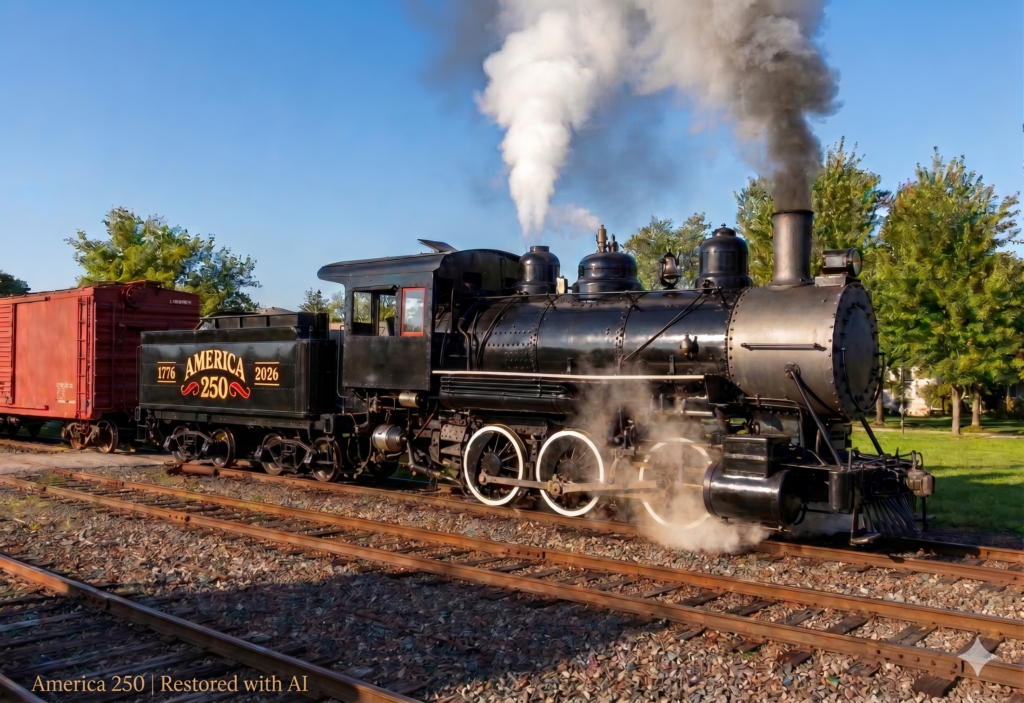
The steam locomotive reached its golden age in the early 20th century — symbols of industrial might and mechanical excellence.
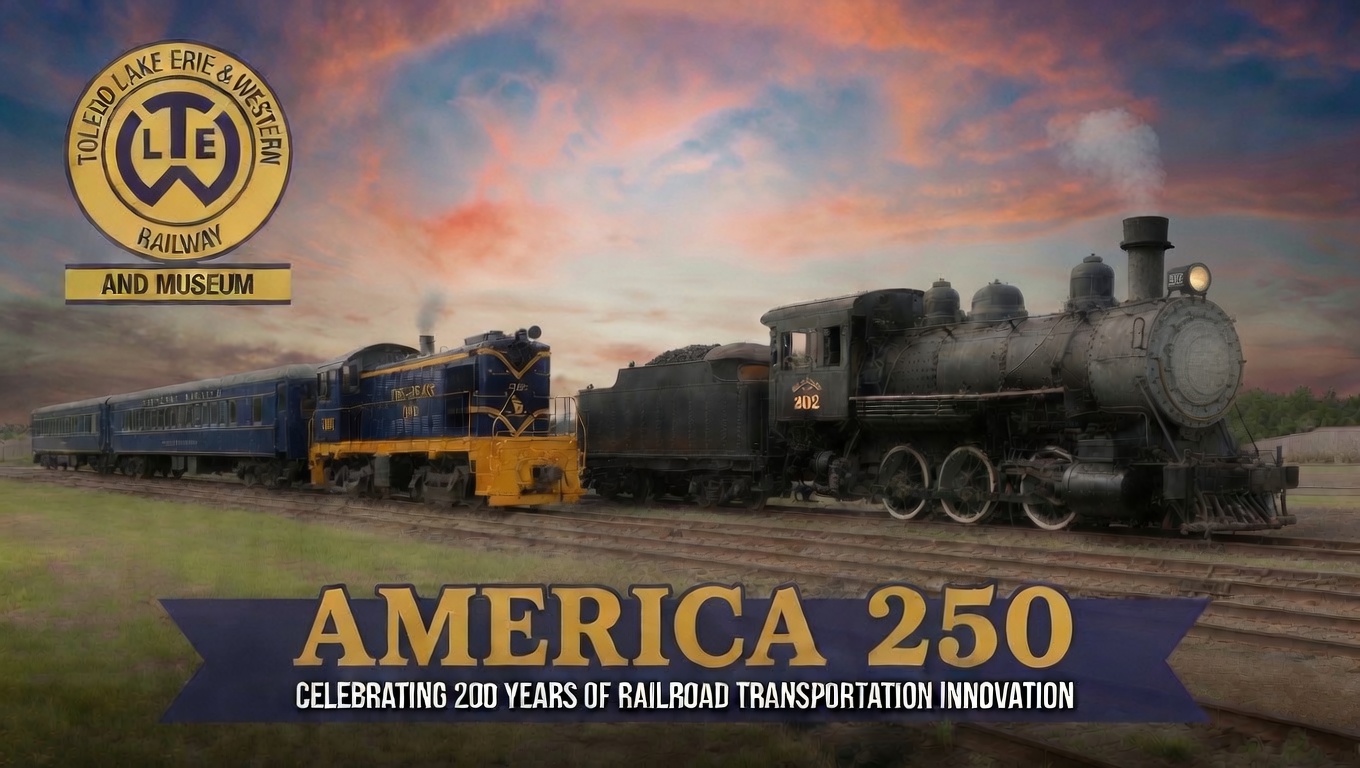
Our Baldwin 0-6-0 #202 (built 1920 for Detroit Edison) is a wonderful example. This rugged switcher, with its reliable boiler, valve gear, and six driving wheels optimized for yard work, represents the dependable steam power that switched cars in factories, power plants, and rail yards across the country. It helped haul the coal, raw materials, and finished goods that built modern America.
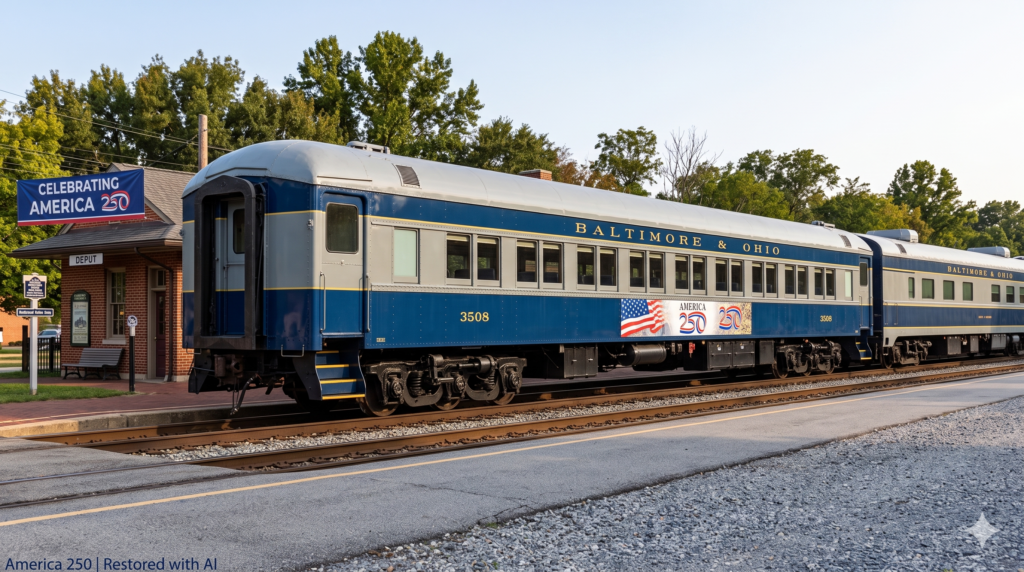
Passenger comfort evolved dramatically too. The 1930s brought a true revolution with practical mechanical air conditioning. The Baltimore & Ohio led the way, introducing the world’s first fully air-conditioned train and equipping chair cars and diners with advanced cooling systems.
Our B&O Chair Car #403 (built 1932) exemplifies this leap forward. These cars featured sophisticated HVAC engineering — refrigeration, fans, ductwork, and controls — that made long-distance rail travel comfortable and competitive with emerging automobiles and airplanes. What was once gritty and uncomfortable became an enjoyable experience for families and business travelers alike.
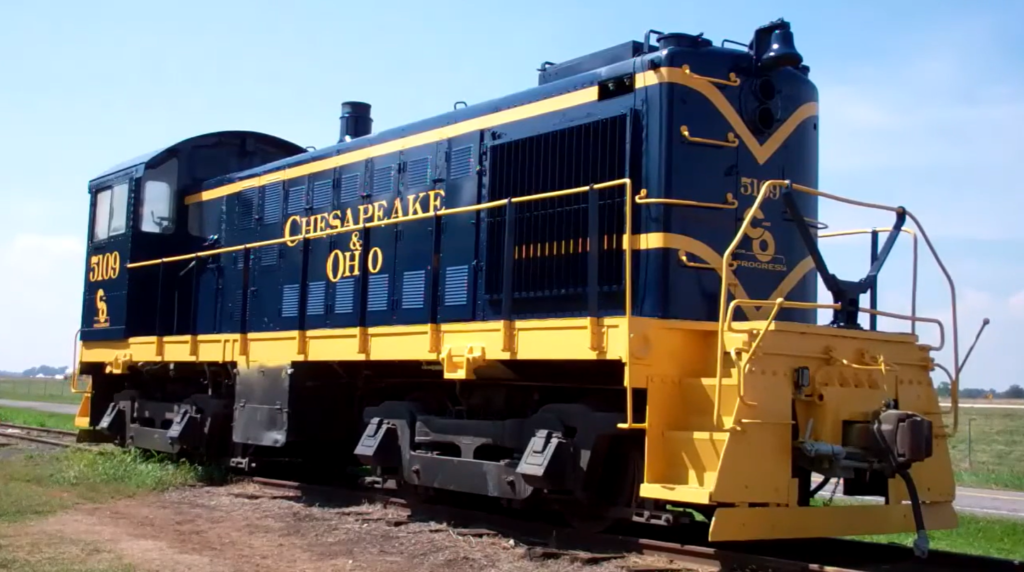
The diesel-electric revolution of the 1930s–1950s marked another huge leap. Switchers and road diesels from ALCO, EMD, and others proved cleaner, more efficient, and far more reliable than steam — no water stops, no constant fire-tending, and instant availability.
Our ALCO S-4 #5109 (Chesapeake & Ohio, 1953) is a classic first-generation diesel switcher. These dependable 1000-horsepower workhorses transformed yard and switching operations nationwide, helping railroads stay competitive in the postwar era.
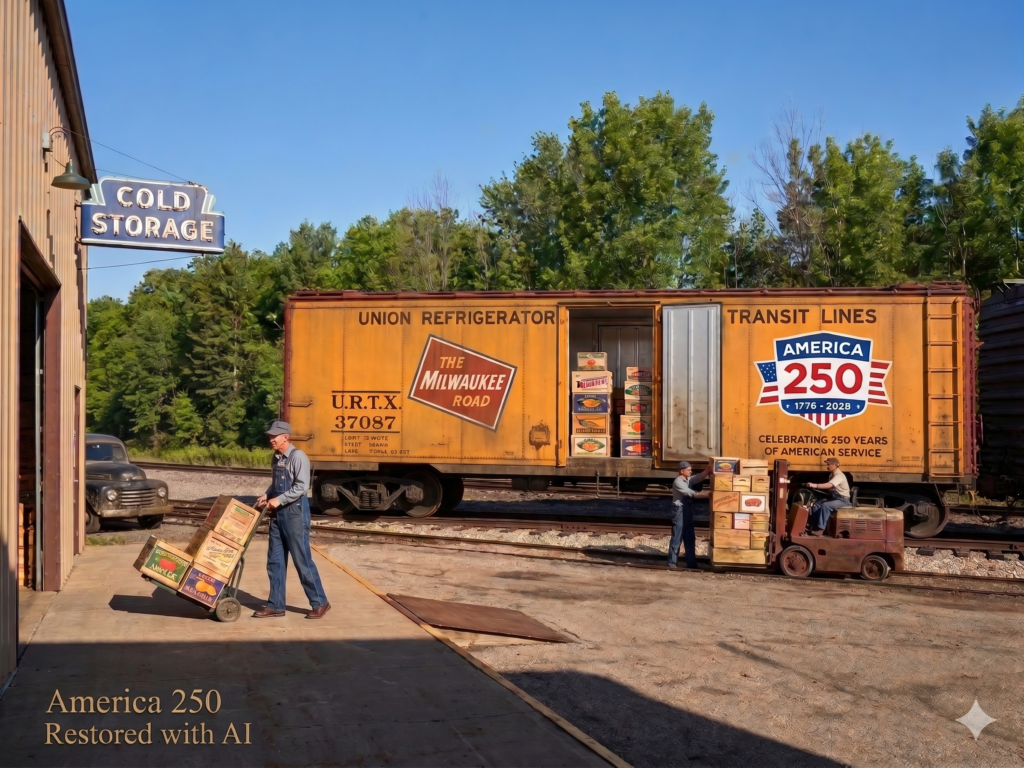
We also preserve the critical logistics side of rail history. Perishable goods needed reliable long-distance transport to feed growing cities.
Our Milwaukee Road / URTX refrigerator car (built circa 1948–1950) highlights mid-20th-century engineering ingenuity. It features axle-driven fan cooling powered directly by the moving trucks (wheels and axles) to circulate air evenly through the car, maintaining consistent temperatures and minimizing spoilage. Combined with a Duryea cushioned underframe that absorbed shocks and vibrations, it protected delicate cargo like fresh produce, meat, and dairy during long journeys. This was applied thermodynamics and mechanical design serving America’s growing agribusiness and urban populations.
Toledo: The Incredible Rail Hub of the Heartland
Toledo’s strategic location — at the Maumee River mouth on Lake Erie and the Miami & Erie Canal terminus — made it a natural transportation crossroads. Multiple major railroads converged here, creating a bustling hub with classification yards, interchanges, and waterfront facilities. At its peak, over 100 trains a day served the region, moving coal to Great Lakes ships, grain, auto parts, glass industry products, and general merchandise in all directions.
Lines like the New York Central, Baltimore & Ohio, Chesapeake & Ohio, and the independent Toledo, St. Louis & Western (the Clover Leaf Route) all played key roles. Our museum sits squarely in this historic corridor, preserving and interpreting that legacy.
The Clover Leaf Route: A Special Chapter in Midwest Connectivity
We take special pride in telling the story of the Clover Leaf Route. The Toledo, St. Louis & Western Railroad operated from Toledo to St. Louis and served as a vital independent “bridge” line connecting Great Lakes commerce with Mississippi River gateways and western markets. Its roots trace back to the narrow-gauge Toledo & Maumee Railroad (1874), built right along the Miami & Erie Canal in Toledo.
Construction of the full route took nearly a decade and involved significant engineering challenges — adapting narrow-gauge lines to standard gauge, crossing rivers (including the notable long bridge over the Maumee and canal at Grand Rapids after the 1913 flood), and threading through varied terrain. The Clover Leaf was acquired by the Nickel Plate Road in 1922, fulfilling a long-held expansion goal for the larger system.
This route perfectly illustrates America’s transportation evolution: canal to rail to modern modes. Its legacy lives on in our operations and preservation work here in Grand Rapids.
Looking Forward: The Bluebird Rises Again
Our artifacts are actively coming back to life. We are restoring #5109 and several passenger coaches (including cars like #403), performing critical track and right-of-way work, and advancing the Bluebird passenger train revival. Our motorcar rides already let visitors experience the rails firsthand, and we continue adding interpretive signage to our outdoor collection.
Join Us in Celebrating America 250
From the visionary canal builders and steam pioneers of the founding era, through the golden age of steam, the diesel transition, air-conditioned comfort, and refrigerated logistics, American transportation engineering has always embodied ingenuity, resilience, and optimism.
At the TLE&W, we are honored to preserve and share these stories along one of the very corridors where canal met rail. As we mark America’s 250th anniversary, these wheels of progress remind us that the same spirit that built our national network still drives us today.
We invite you to visit us in Grand Rapids, ride with us, support our restoration efforts, volunteer, or become a member. Help us keep this living history rolling strong for the next generation!
Visit tlew.org today to learn more, plan your visit, or contribute to the Bluebird revival and equipment restoration.
The journey continues — and we’d love for you to be part of it.